

Although active during the day, the Bermuda Petrel only return to its nest burrow at night, potentially to avoid predators. It feeds mainly on shrimp and squid, which it takes from the surface of the open ocean.


Bermuda Petrel
Pterodroma cahow
Photo:
The State of Canada's Birds is presented in partnership by Environment and Climate Change Canada and Birds Canada.
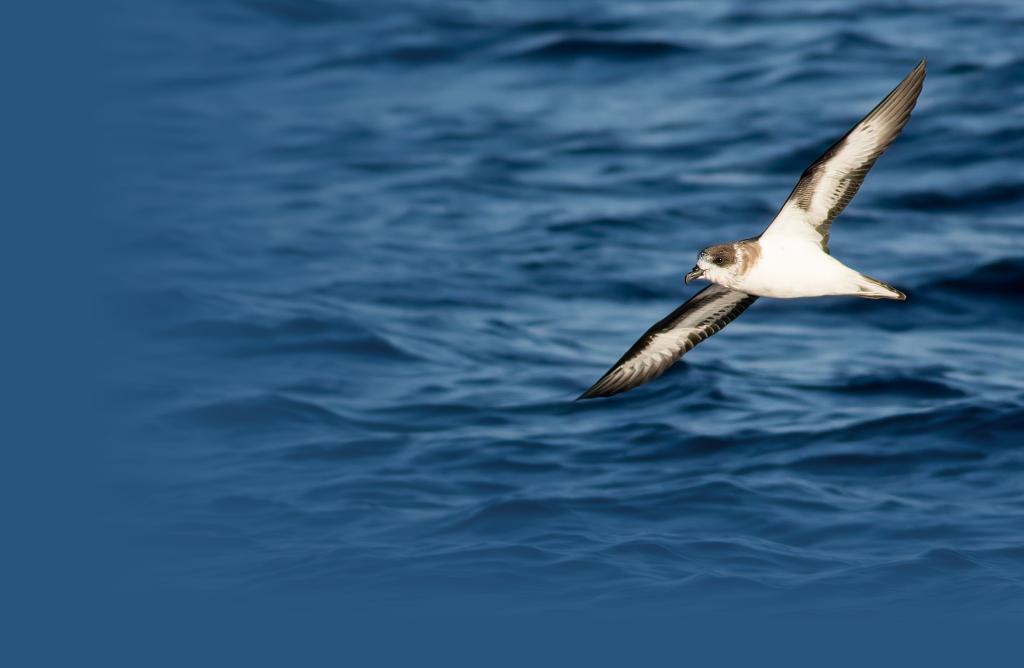 Bermuda Petrel
Status and Trends
Distribution
Methods
The State of Canada's Birds is presented in partnership by Environment and Climate Change Canada and Birds Canada.
Did you know
Summary
Trend
Data Deficient
Confidence: Data Deficient
Goal
Data Deficient
The Bermuda Petrel is one of the rarest seabirds in the world. It was thought to be extinct for 300 years, but is now known to number just over 300 individuals (Campioni et al., 2024). It is currently known to breed only on the Castle Harbour islands in Bermuda. There are just two documented sightings of Bermuda Petrel in Canadian waters, in 2009 and 2014, both off the coast of Nova Scotia McLaren, 2012, Brinkley and Sutherland, 2017). However, deployment of light-level global location sensors at the breeding colony from 2009 to 2012 (Madeiros et al., 2014) and subsequent application of GPS transmitters on breeding adults has shown that a large proportion of the tagged birds are using Canadian waters during incubation and chick-rearing periods in April and May (Raine et al., 2021, Campioni et al., 2023). Data are insufficient to estimate trends or set a goal for the Canadian population.
Migration Strategy

Seasonal visitor
Canadian Responsibility

Population Estimates

Breeding
0

Annual
200

Global
310
Related readings
Summary report


 View the report
Trends from this species and others are rolled up into The State of Canada’s Birds Summary Report. Follow the link below to view the report, learn more about birds in Canada, and see how we can all help birds.
This species is included in the following analysis groups for the report:
Marine Birds

Environment and Climate Change Canada and Birds Canada. 2024. The State of Canada’s Birds – Bermuda Petrel. Data accessed from NatureCounts, Birds Canada.
https://doi.org/10.71842/kydr-c281
The State of Canada's Birds is presented in partnership by Environment and Climate Change Canada and Birds Canada.
Did you know
Although active during the day, the Bermuda Petrel only return to its nest burrow at night, potentially to avoid predators. It feeds mainly on shrimp and squid, which it takes from the surface of the open ocean.
Distribution and Occurrence
1820
Loading...

Get Involved
Citizen Science is vital to monitoring birds in Canada. Participating in programs like the ones below helps monitor this species.

Beached Bird Survey

eBird


Become a Citizen Scientist today!
Follow the link below to learn about more programs that you can participate in to help monitor birds in Canada.
Learn more
Related readings
Summary report
View the report
Trends from this species and others are rolled up into The State of Canada’s Birds Summary Report. Follow the link below to view the report, learn more about birds in Canada, and see how we can all help birds.
This species is included in the following analysis groups for the report:
Marine Birds
Environment and Climate Change Canada and Birds Canada. 2024. The State of Canada’s Birds – Bermuda Petrel. Data accessed from NatureCounts, Birds Canada.
https://doi.org/10.71842/kydr-c281