

Primarily brown and streaky - though yellower in the east - the Palm Warbler often moves about on the ground where it searches for insects and rhythmically bobs its tail. Its misleading name suggests a connection to palm trees, however, it is mainly found in open, scrubby areas, bogs, or short trees.


Palm Warbler
Setophaga palmarum
Photo:
The State of Canada's Birds is presented in partnership by Environment and Climate Change Canada and Birds Canada.
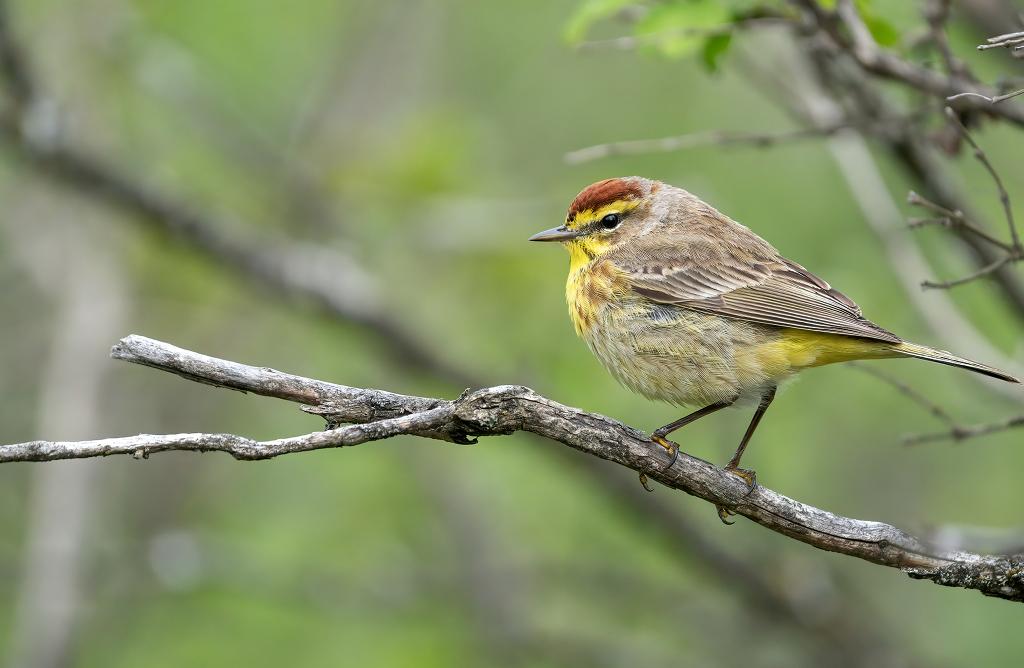 Palm Warbler
Status and Trends
Distribution
Methods
The State of Canada's Birds is presented in partnership by Environment and Climate Change Canada and Birds Canada.
Did you know
Summary
Trend
Moderate Increase
Confidence: High
Goal
Within Goal Range
The Palm Warbler is a common and widespread species throughout Canada's Boreal forest east of the Rocky Mountains. It winters along the Pacific Coast and southeastern United States, as well as in Central America and the Caribbean. There are approximately 13 million individuals in Canada, which is nearly 100% of the global population and represents a very high degree of responsibility for Canada, as fewer than 60,000 others breed in the United States, in Minnesota, Wisconsin, Michigan, and New York. The Canadian population of Palm Warbler has shown a moderate increase relative to 1970 based on the Breeding Bird Survey, and more recent trends from multiple Canadian Migration Monitoring Network observatories all reflect at least a moderate rate of population growth. Confidence in the assessment is therefore high because of the alignment between these sources, despite the Breeding Bird Survey having limited coverage of the northern parts of the breeding range. The national population of Palm Warbler is within its goal range.
Migration Strategy

Short-distance

Long-distance
Canadian Responsibility

Population Estimates

Breeding
13,000,000

Annual
13,000,000

Global
13,000,000
Related readings
Summary report


Trends from this species and others are rolled up into The State of Canada’s Birds Summary Report. Follow the link below to view the report, learn more about birds in Canada, and see how we can all help birds.
View the report

Environment and Climate Change Canada and Birds Canada. 2024. The State of Canada’s Birds – Palm Warbler. Data accessed from NatureCounts, Birds Canada.
https://doi.org/10.71842/m9fg-hr62
The State of Canada's Birds is presented in partnership by Environment and Climate Change Canada and Birds Canada.
Did you know
Primarily brown and streaky - though yellower in the east - the Palm Warbler often moves about on the ground where it searches for insects and rhythmically bobs its tail. Its misleading name suggests a connection to palm trees, however, it is mainly found in open, scrubby areas, bogs, or short trees.
Distribution and Occurrence
16800
Loading...

Get Involved
Citizen Science is vital to monitoring birds in Canada. Participating in programs like the ones below helps monitor this species.


Become a Citizen Scientist today!
Follow the link below to learn about more programs that you can participate in to help monitor birds in Canada.
Learn more
Related readings
Summary report
Trends from this species and others are rolled up into The State of Canada’s Birds Summary Report. Follow the link below to view the report, learn more about birds in Canada, and see how we can all help birds.
View the report
Environment and Climate Change Canada and Birds Canada. 2024. The State of Canada’s Birds – Palm Warbler. Data accessed from NatureCounts, Birds Canada.
https://doi.org/10.71842/m9fg-hr62